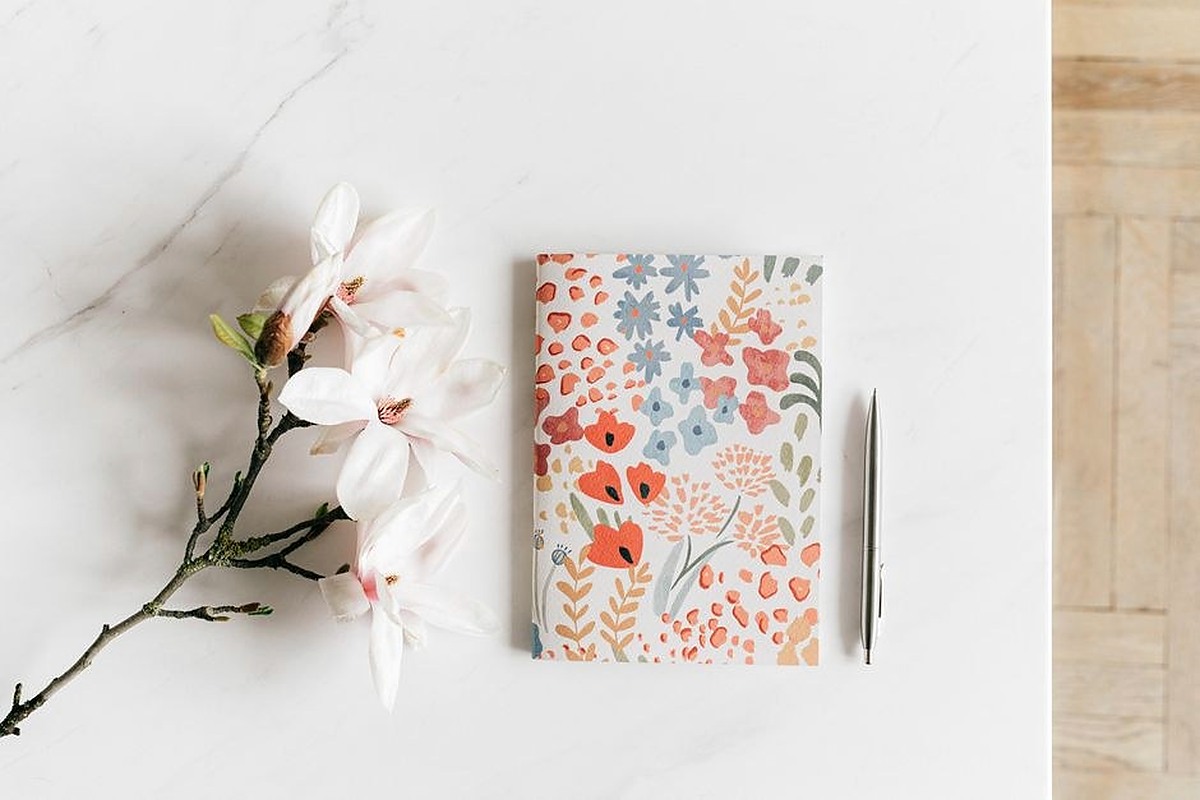
Reading is often treated as if it needs more discipline: a target, a timer, a list, a streak. Sometimes it needs something much simpler—a place where the book can remain visible and where sitting down for ten minutes feels natural.
A small reading table does not have to be a piece of furniture bought for the purpose. It can be the corner of a desk, a narrow side table or one cleared end of a dining table. What matters is that the space has a little continuity. The book can stay where you left it instead of disappearing into a bag or a pile.
Give the book a landing place
Keep the surface mostly empty. A lamp, the current book, a notebook and a coaster are enough. The fewer objects that have to be moved before reading begins, the less the activity competes with everything else happening in the room.
Good light matters more than atmosphere. If daylight reaches the table in the afternoon, use it. In the evening, a lamp that illuminates the page without shining directly into your eyes makes a much bigger difference than a decorative setup.
Keep the tools modest
A pencil tucked into the notebook is usually more useful than a complicated system. The notebook can hold anything that seems worth carrying forward: a title mentioned in the text, a sentence about why a chapter worked, a question you want to look up later, or simply the date you finished.
There is no need to record every book in the same way. Some deserve several pages of notes; others deserve none. The table should support reading, not create an administrative task beside it.
Let objects invite you back
Leaving the book visible is a quiet form of reminder. A closed laptop asks to be opened and managed. A book lying beside a cup has a different effect: it suggests that the next step is already available.
This is especially useful for books that are better read slowly—essays, short stories, poetry, travel writing or anything dense enough that a few pages can be satisfying. A small reading table makes partial sessions feel legitimate. Ten pages after lunch still count as reading; they do not need to become an evening plan.
Change the table with the season
The setup can stay simple while the details change. In summer, move closer to a window and keep a glass of water nearby. In winter, bring the lamp lower and add a place for tea. A flower, a found leaf or a postcard can sit there for a week and then disappear again.
The goal is not to create a photogenic corner. It is to reduce the distance between wanting to read and actually opening the book. When the table is doing its job, you stop noticing the arrangement and start noticing the page.