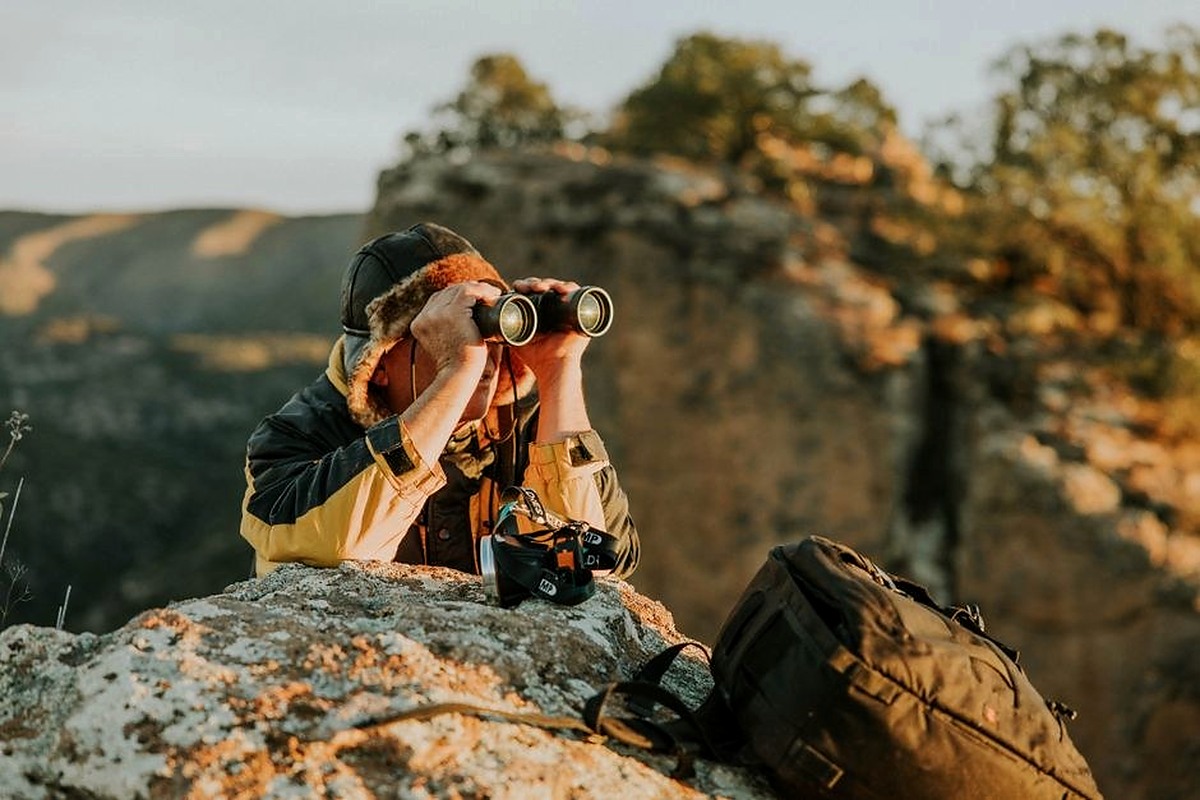
A camera can change the way a familiar walk feels. The route slows down. Small changes in light become noticeable. A wall, field or station platform that usually passes without comment begins to offer shapes, reflections and small human details.
The mistake is turning that attention into a production plan. A photo walk does not need a list of subjects or a promise that every hour will produce something worth keeping. It works better as a reason to look carefully.
Choose a route with changes in scale
Good walking routes move between different kinds of space. A path might begin among houses, open into fields, pass through woodland and finish on higher ground. Those changes give you different distances to work with: details close to the camera, scenes with a clear middle ground, and broad views where weather becomes part of the picture.
You do not need dramatic scenery. An ordinary route can be enough if it contains transitions—a bridge after a narrow street, a stand of trees beside open pasture, or a quiet platform at the edge of town.
Let the light set the pace
If the sun is harsh, look for shade, windows, silhouettes and reflected light instead of fighting for a postcard landscape. When clouds arrive, notice how color becomes softer and how small details hold more information. If late light reaches the hillside, stay with it for a few minutes rather than rushing toward the next viewpoint.
The useful question is not “What should I photograph?” but “What looks different because I stopped here?”
Photograph the transitions
The most memorable pictures from a walk are often not the obvious destination. They may be the moment a trail leaves the trees, the boots waiting beside a gate, a hand holding a map, a cyclist crossing a patch of light, or the view back toward a place you have just left.
These in-between scenes give a set of photographs rhythm. They explain how the day moved, not just where it ended.
Carry less than the camera bag allows
One camera and one lens are often enough. Spare batteries and a cleaning cloth matter more than extra choices. When there is less equipment to manage, the camera is more likely to stay accessible instead of being packed away every time the path becomes uneven.
If you use a phone, the same principle applies: clean the lens, keep it easy to reach, and avoid spending the walk sorting pictures as you make them.
Return with fewer photographs
At home, wait a little before editing. Then choose a small group that tells the story of the route. Similar frames become easier to compare when the memory of taking them is less immediate.
A successful photo walk can end with five useful images or none at all. The real return is the habit of paying attention. The camera simply gives that attention somewhere to land.